AI that learns your operation. Built into everything we do.
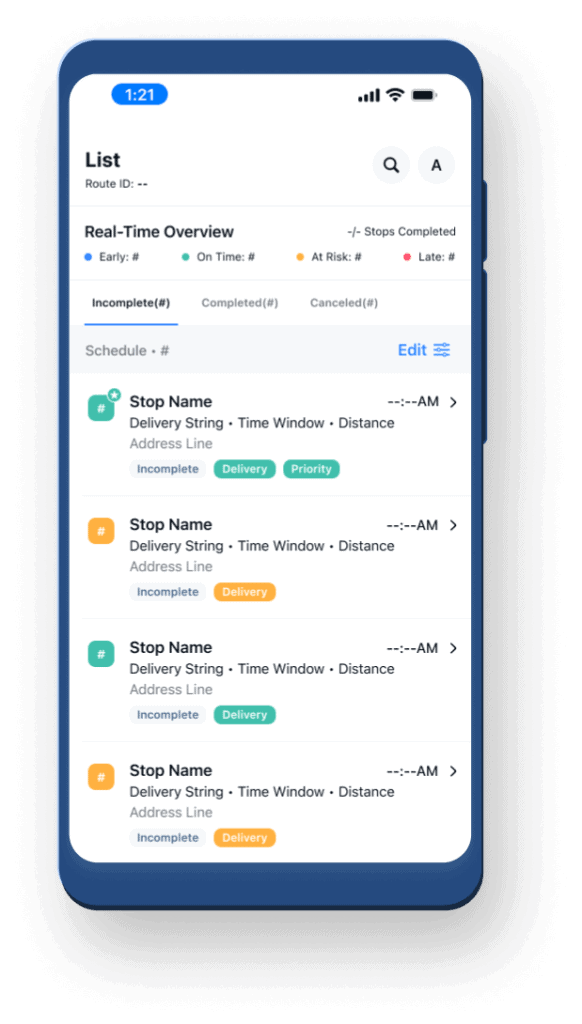
AI everywhere, for every role.

Most routing software optimizes a route. Wise Systems learns how your operation runs — and keeps improving it.

AI isn’t a dashboard or a setting inside Wise Systems. It’s the foundation every product is built on. From the moment your first route runs, Wise Systems starts learning — and it never stops.

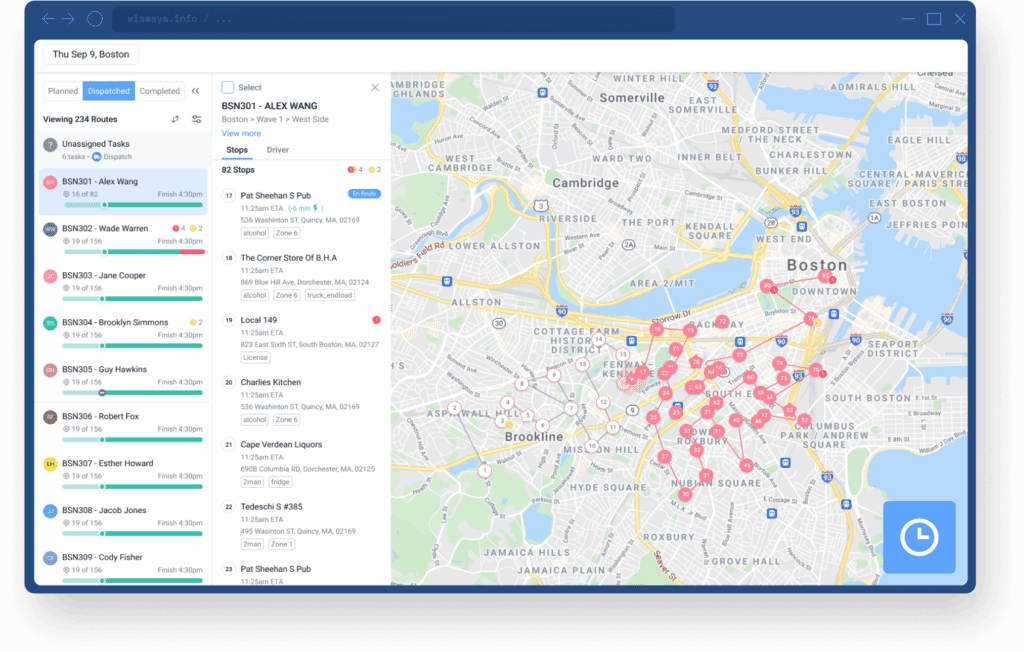
Wise Systems is last-mile routing and dispatch software with machine learning built into every product. The same intelligence works across planning, dispatch, and driver execution, so the whole operation gets sharper together.

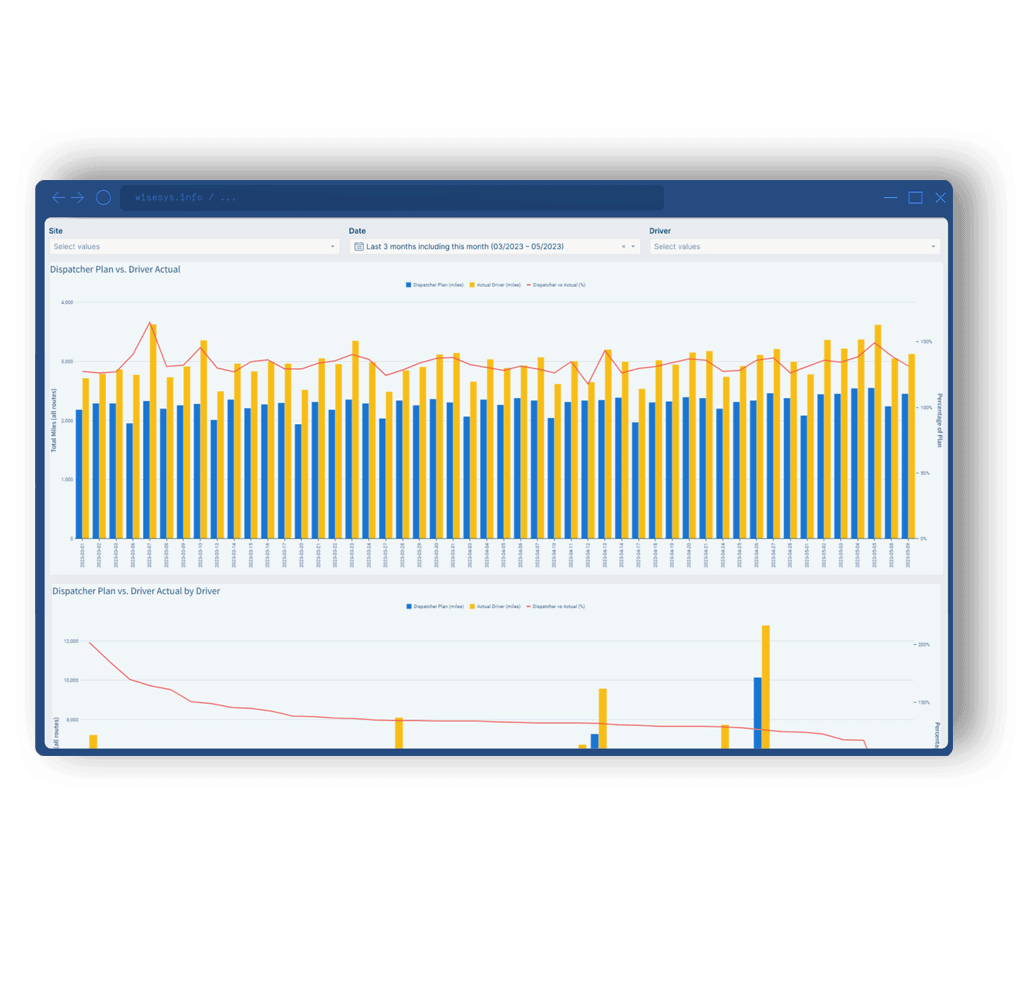
  • Your planners get smarter scenarios, grounded in how your fleet actually performs — with Strategic Planner and Route Planner.
  • Your dispatchers get recommendations that reflect how your best people make decisions — with Dispatcher.
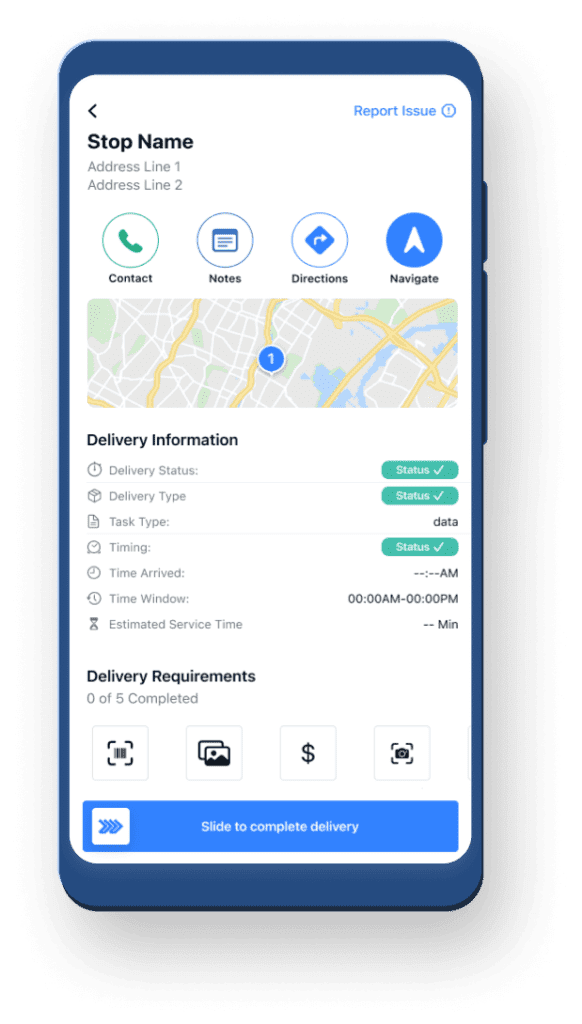
  • Your drivers get routes that account for how your operation really works, not just what the map says — with the Driver app.

Every product in the Wise Systems suite is built on the same AI foundation. The intelligence compounds across all of them.
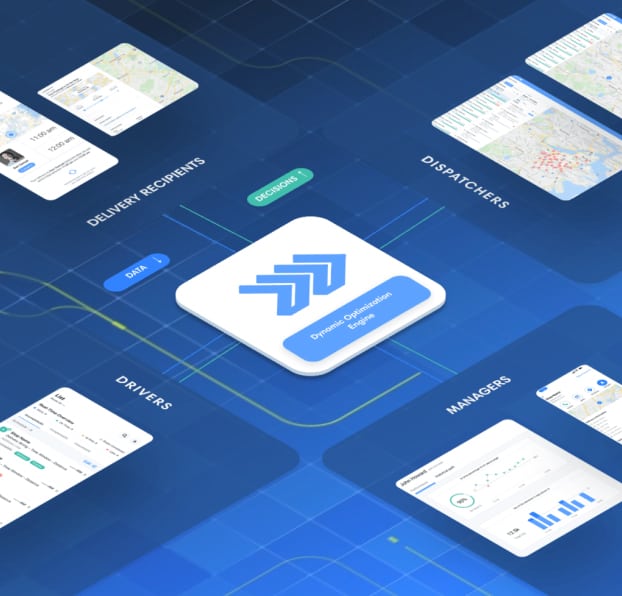
Leverage the power of the Dynamic Optimization Engine (DOE) to automate routing, drive fleet utilization, and optimize your routes during all stages of delivery.

Machine learning makes every delivery better

AI software analyzes details like mileage, timing and driver notes to learn and improve with every operation and delivery.
Machine Learning considers the entire delivery experience from parking, to unloading, transporting, transacting, and returning to the vehicle. Efficiencies can be gained from insights on parking availability, customer reps schedules, etc.
Every delivery adds to the base of knowledge, making improvements ongoing.

Wise Systems also offers AI consulting. Let’s talk about your operation.

Contact us

Let’s talk.

We’d love to learn more about your routing challenges and see where we can help.

Some more info will help us get you in touch with the right people:

Frequently asked questions

Wise Systems uses machine learning across its routing and dispatch platform to make every delivery plan more accurate over time. Rather than treating AI as a single feature, Wise applies it throughout the workflow: predicting how long stops will take, learning how drivers actually operate, and surfacing opportunities to improve routes. The longer a fleet uses Wise Systems, the more data the models learn from — so routing accuracy compounds rather than staying fixed.
Wise Systems runs several machine-learning models that work quietly behind the routing engine. These include a service-time model that predicts how long each stop will actually take, a driver-assignment model that matches drivers to the work they handle best, and a driver-preference model that shapes routes to match how drivers really operate. Because these models learn from each fleet’s own history, predictions get more accurate the longer the system is in use.
Most routing tools optimize against a fixed snapshot of data. Wise Systems improves as it runs: every completed route feeds the models more real-world data on service times, sequences, and driver behavior, which sharpens the next plan. This is why a fleet’s routing twelve months in is measurably better than on day one — a compounding advantage that point-in-time optimization can’t match.
Experienced dispatchers and drivers carry hard-won “tribal knowledge” — which customers are tricky, how long a site really takes, the sequence that just works. When that person leaves, the knowledge usually leaves with them. Wise Systems encodes these patterns into its machine-learning models, so the operational know-how lives in the system and keeps working even as staff change.
Wise Systems frames its AI as a journey toward greater routing autonomy, from manual planning to increasingly automated, self-improving operations where the system handles more of the day and surfaces only the decisions that need a human. Higher levels of autonomy are available as fleets are ready for them, with people staying in the loop to set constraints and handle exceptions.

Like what you see? Sign up for our newsletter.